How a Private CCTV Installation Contributed to the Investigation and Prosecution of a Kidnapping Syndicate in Benin City Edo State, Nigeria.
Security is increasingly becoming a technology-driven services across homes, businesses, public spaces and critical infrastructure, the ability to see, detect, document and respond to security threats is becoming an essential component of effective security management.
Yet, despite growing investments in electronic security systems, many organisations and communities still underestimate the strategic value of Closed-Circuit Television (CCTV).
A recent incident in Benin City Edo State, Nigeria, West Africa offers a compelling illustration of what properly deployed surveillance technology can contribute to public safety and criminal justice.
THE INCIDENT THAT REINFORCES THE VALUE OF CCTV
On November 1, 2026, Vanguard News published a report titled “Kidnapping Horror in Edo: Woman, Fellow Kidnappers Caught by CCTV to Die.”
The report detailed a kidnapping incident that occurred on June 14, 2026, at Vegetable Market, along Airport Road, Benin City.
Armed kidnappers operating SUV Jeep attacked another SUV nearby, shot its tyres and abducted a woman from it in broad daylight.
Unknown to the perpetrators, a CCTV camera installed in a facility right opposite the incident location captured the crime operation.
The footage subsequently circulated on social media and attracted the attention of security agencies. Following intelligence-led investigations, the police arrested four suspects within days.
Investigations subsequently connected the suspects to other kidnapping incidents across the state. Then, on September 29, 2026, the four defendants were convicted on multiple charges and sentenced to death by the designated court.
One particularly significant aspect of the judgment was the commendation given by the presiding judge to the facility owner whose CCTV system captured the incident and the follow up release to authority.
The judge acknowledged that the footage provided important evidence that assisted the police in detecting and proving the crime. He also encouraged organizations and residence to install functional CCTV cameras at their facilities, homes, shops, and vehicles.
This incident demonstrates an important reality:
A CCTV camera installed for property protection can become an invaluable instrument for wider community safety, criminal investigation and the administration of justice.
BEYOND RECORDING: SIX STRATEGIC VALUES OF CCTV
This kidnapping incident provides an opportunity to examine six important contributions of CCTV to contemporary security management.
1. Crime Detection and Incident Documentation
CCTV provides continuous or scheduled visual monitoring of designated areas. It helps detect suspicious activities, identify unusual movements and record incidents that might otherwise go unnoticed.
2. Criminal Investigation and Identification
Recorded footage can provide investigators with useful visual intelligence, including descriptions of individuals – applying BAGOC, vehicles – applying SCRIMM features movements, timelines and sequences of events. This information can support the identification and tracing of suspected offenders.
3. Evidence Collection and Criminal Prosecution
Perhaps the most striking value demonstrated by the Edo incident is the evidential contribution of CCTV. Properly preserved footage can corroborate witness accounts, establish timelines and support investigations and judicial proceedings, subject to applicable chain of custody and evidential requirements.
4. Crime Prevention and Deterrence
Strategically positioned and visible cameras with conspicuous signage can discourage opportunistic criminal activities by increasing the perceived likelihood of detection and identification.
5. Situational Awareness and Incident Response
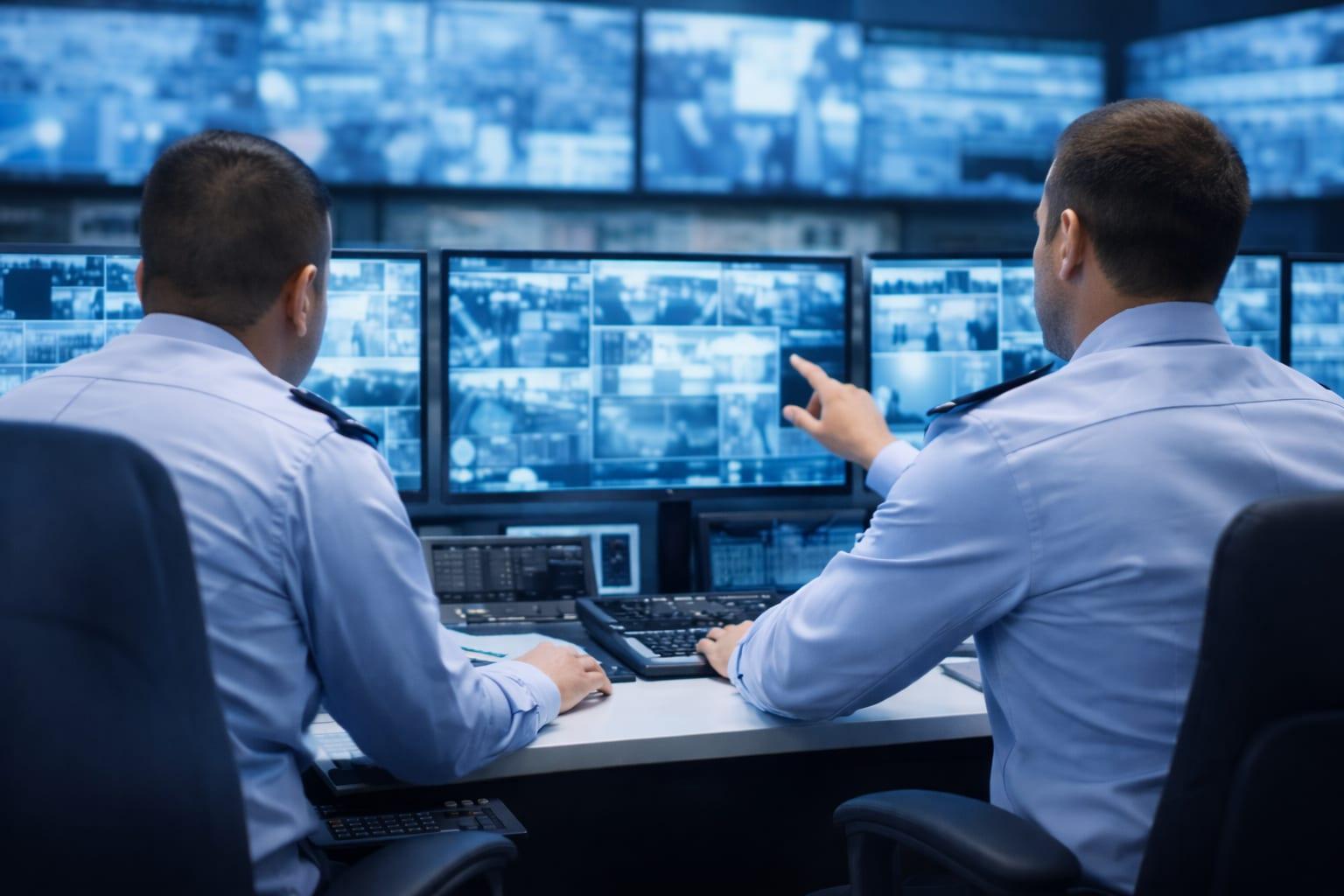
CCTV enables security personnel to observe activities across multiple locations from a central monitoring environment. With competent operators and established escalation procedures, emerging threats can be identified and communicated for appropriate prompt intervention.
6. Accountability and Operational Oversight
In corporate and institutional environments, CCTV provides an objective visual reference for reviewing incidents, monitoring compliance, investigating complaints and evaluating security performance.
THE PROBLEM: INSTALLING CCTV IS NOT THE SAME AS ACHIEVING CCTV SECURITY
Here lies one of the most common misconceptions surrounding electronic security investments.
Many organisations believe that installing cameras automatically translates into effective surveillance.
It does not.
A CCTV system may consist of banks of cameras and video walls and still fail to deliver meaningful security outcomes if the technology, installation, monitoring personnel and operational processes are inadequate.
Consider the following:
- Cameras installed without proper risk assessment may leave critical security blind spots.
- Poor camera specifications may produce footage that cannot adequately identify relevant details, that is, meeting DORI levels.
- Inadequate storage capacity may result in the loss of critical recordings.
- Unreliable power and network infrastructure may compromise surveillance continuity.
- Untrained control room operators may overlook suspicious activities or fail to escalate incidents.
- Poor footage management may undermine the integrity and admissibility of recorded evidence.
The lesson is simple: CCTV effectiveness is determined not merely by the number of cameras installed, but by the quality of the entire surveillance capability including the operators and the supervisors.
BUILDING AN EFFECTIVE CCTV SECURITY CAPABILITY
For CCTV system to deliver its intended value and return on investment organisations must approach surveillance as an integrated security function rather than an isolated technology purchase.
Four critical elements deserve attention:
1. TECHNOLOGY
Select fit-for-purpose cameras, recording infrastructure, storage systems and Video Management Systems (VMS) based on the security requirements of the environment.
2. INFRASTRUCTURE
Conduct proper security assessments, determine camera locations, identify coverage requirements and ensure reliable power, connectivity and recording infrastructure.
3. PEOPLE
Deploy competent and properly trained CCTV control room operators, supervisors and managers who understand surveillance principles, observation, incident detection, verification, footage handling/chain of custody, escalation and reporting.
4. PROCESSES
Establish clear operational procedures covering monitoring, incident management, footage retrieval, evidence preservation, maintenance, access control and data protection.
When these elements work together, CCTV system evolves from a passive recording arrangement into an active security management capability.
WATERMARK SECURITY CONSULTING: DEVELOPING CCTV COMPETENCE AND SECURITY CAPABILITY
At Watermark Security Consulting (WSC), we recognise that the future of effective security management lies in the integration of competent people, appropriate technology and structured operational processes.
Our services are designed to help organisations develop the knowledge, infrastructure and operational capabilities required to maximise their security investments.
Our four service pillars include:
1. CCTV ACADEMY – TRAINING AND CERTIFICATION
We develop competent CCTV professionals through practical, industry-focused training and certification programmes, including:
- Certified CCTV Control Room Operator (CCCO).
- CCTV surveillance and monitoring operations.
- Incident detection, verification and escalation.
- CCTV control room supervision and management.
Our focus is on developing professionals who can translate surveillance technology into meaningful security outcomes.
2. CCTV CONTROL ROOM OPERATIONS
We support organisations in establishing, improving and managing CCTV control room capabilities through operator development and deployment, operational support and structured control room management solutions.
3. SECURITY PROJECT MANAGEMENT
We provide professional advisory and project management support for electronic security and surveillance projects, including:
- Security risk assessments and site surveys.
- CCTV system planning and design.
- Camera specifications and technology selection.
- Control room planning and development.
- Installation project coordination.
- Maintenance planning and operational support.
4. SECURITY EDUCATION AND AWARENESS
We promote security consciousness through practical education and awareness initiatives for corporate organisations, businesses, residential communities and individuals.
Our objective is to build a stronger security culture through knowledge, preparedness and informed decision-making.
A STRATEGIC CALL TO ACTION
The Edo State incident should serve as a wake-up call for organisations, business owners, residential estate managers and community leaders.
If a single privately installed CCTV camera could contribute such significant visual evidence in a criminal investigation, imagine the collective security value of properly designed and professionally managed surveillance systems across our communities.
Businesses should reconsider CCTV system as merely an installation expense. Residential communities should view it as an important component of collective safety. Corporate security managers should recognise it as an operational intelligence resource.
However, investment in CCTV must go beyond purchasing cameras.
Invest in the right technology. Invest in competent people. Invest in structured processes. Invest in professional management.
The objective should not simply be to see what is happening, but to develop the capacity to recognise threats, verify incidents, support timely intervention and preserve reliable evidence.
At Watermark Security Consulting, we remain committed to advancing professional security practice through training, technology, operational excellence and security awareness.